


Beyond the Rooftop: How ClearVue’s Solar Technology is Turning Skyscrapers into Power Plants
In 2026, the global energy system is entering a structurally different phase, characterised by sustained growth in electricity demand, rather than cyclical variation. Three forces are driving this shift:
the rapid expansion of energy-intensive artificial intelligence infrastructure
the electrification of transport at scale
a global cooling demand that has approximately doubled over the past twenty years.
Together, these trends are placing increasing pressure on urban energy systems both in developed and emerging markets.
The built environment has emerged as a central lever for decarbonisation and energy security. Buildings account for roughly 40% of global energy-related CO₂ emissions, making them one of the most regulated and capital-intensive frontiers of the energy transition. Policymakers are responding accordingly. Europe’s Energy Performance of Buildings Directive (EPBD) is shifting requirements for commercial real estate from incremental efficiency improvements toward active, on-site energy generation. For asset owners, compliance is rapidly becoming a value-preservation issue rather than a discretionary sustainability upgrade.
However, traditional renewable solutions face structural limitations in dense urban environments. Rooftop solar alone is often insufficient to materially offset the electricity demand of modern commercial buildings, particularly high-rise assets with large cooling and data loads. This constraint has created a widening gap between regulatory ambition and technical feasibility, exposing both a risk and an opportunity for capital.
Building-Integrated Photovoltaics (BIPV) addresses this gap by transforming the vertical surfaces of buildings into energy-producing assets. By embedding photovoltaic functionality directly into façades, windows, and architectural elements, BIPV expands the usable generation area far beyond the roofline. For developers, institutional owners, and long-duration capital providers, this approach reframes the building envelope from a passive cost centre into an active infrastructure asset with predictable, long-term energy output.
Historically, adoption has been limited by a trade-off between power generation and architectural requirements such as transparency, daylighting, and design flexibility. Recent advances in materials science and photovoltaic engineering are now reducing this constraint, enabling solutions that preserve natural light while delivering meaningful energy yield. As regulation tightens and urban electricity demand continues to rise, technologies that resolve this balance are positioned to benefit from both policy support and structural demand growth.
From an investment perspective, BIPV sits at the intersection of energy infrastructure, real assets, and climate regulation. It is increasingly aligned with the priorities of institutional capital: long asset lives, embedded demand, regulatory tailwinds, and integration into essential urban infrastructure. As cities seek to decarbonise without sacrificing density or functionality, the verticalisation of solar generation is moving from a niche concept toward a scalable component of the global energy transition.
ClearVue Technologies Limited (ASX: CPV | OTCQX: CVUEF | Frankfurt: A2PDU9) is rapidly emerging as a primary architect of the global transition to net-zero buildings, offering a visionary solution to one of the most pressing decarbonisation challenges in the built environment. The company has developed a patented solar technology that transform nearly every external surface of a building into an energy-generating asset.
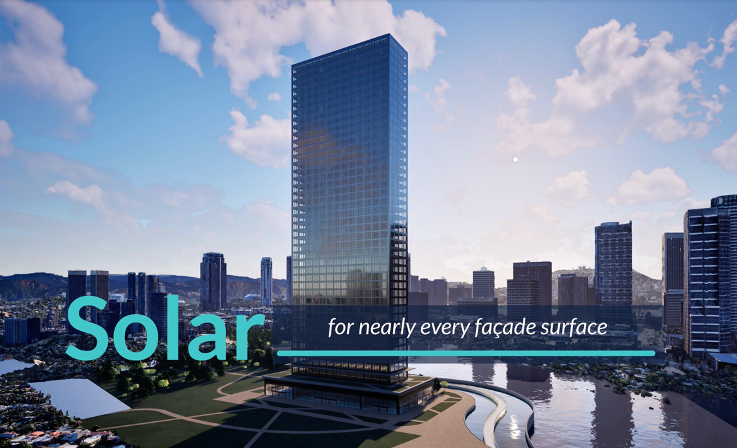
As of early 2026, the company has successfully transitioned from an innovative disruptor to a commercial platform, driven by the breakthrough launch of its Gen3 Solar Vision Glass. This next-generation technology has set a new industry benchmark, delivering a staggering 66% increase in energy output - now exceeding 50W / m2 for optimal sizes - while simultaneously slashing manufacturing complexity and production times by half. By converting every external surface of a building into an active energy-generating asset without sacrificing transparency or aesthetic appeal, ClearVue has turned sustainable architecture into a compelling economic reality with payback periods now falling to less than five years.
The company’s growth is fueled by a highly scalable, capital-light licensing model that leverages global manufacturing partnerships rather than heavy internal infrastructure. The commercial pipeline exceeds $60 million in submitted proposals across Africa, Asia, and Oceania. Major current milestones, such as the landmark agreement to reclad dual ten-story towers in South Africa and the completion of high-profile installations for the World Bank, serve as powerful proof-of-concept for ClearVue’s international scalability. With a refreshed leadership team, a reinforced capital position from recent oversubscribed raises, ClearVue is positioned as a key technology provider in the fragmented BIPV landscape throughout 2026 and beyond.
ClearVue Technologies offers investors the opportunity to participate in the structural transformation of the global building and energy markets. DGWA is supporting the company’s European investor outreach and will provide opportunities to engage with management through both virtual meetings and in-person events. Interested investors are invited to contact info@dgwa.org for further information.
The stock is traded in Australia, on the Frankfurt, Trade Gate and Stuttgart Stock Exchange (WKN: A2PDU9.

Contact
DGWA GmbH
Disclaimer
The contents published by DGWA are compiled with the greatest possible care. However, DGWA GmbH does not assume any liability for the correctness, completeness and topicality of the contents provided.
Furthermore, the arrival of any course forecasts / course targets is not guaranteed in any way. The use of the contents of the analyses is at the user’s own risk. The offer is aimed at users residing in the Federal Republic of Germany, Switzerland or Austria. The information is not intended for users who are resident in countries other than those mentioned above or who for other reasons are subject to the regulations of other countries. DGWA GmbH does not warrant or make any representations that these analyses or the information contained in them are in accordance with the laws of countries other than the Federal Republic of Germany, Switzerland or Austria.
The subject of published financial analyses may be shares of companies with a low market capitalisation. Especially for companies with a low market capitalization, investors often have to reckon with high volatility or low market liquidity.
Published financial analyses focus on equities that are associated with high price risks and are therefore not suitable for inexperienced or risk-averse investors. This applies in particular to all over-the-counter (OTC) equities, i.e. equities traded outside a supervised stock exchange or regulated market or on the over-the-counter market. The same applies to shares traded on the Australian Stock Exchange (ASX), on Canadian stock exchanges (e.g. in Toronto or Vancouver) or on the Alternative Investment Market (AIM), a segment of the London Stock Exchange. The equities we analyse are often traded on one of these markets, which are segments of the highest risk class. Stocks traded on these markets are threatened at all times by the possibility of a total loss, high volatility and the possibility of limited tradability and, in particular, saleability due to low trading volumes. High price opportunities are offset by enormous risks.
Published financial analyses contain only a non-binding expression of opinion on the investment instruments addressed and the market conditions at the time of publication of the document. An assessment of the company, in particular of share price targets, may change without prior notice. All data and information originate from sources which the publisher considers to be trustworthy and reliable at the time of preparation. Despite all care taken in the preparation of the research documents / reports, the publisher / author assumes no liability or guarantee whatsoever for the correctness, completeness and accuracy of the information contained in the reports or for losses that may result from any errors, omissions or inaccuracies. Liability claims against the DGWA GmbH and/or the author, which refer to damages of idealistic or material kind, which result from the use or disuse of the presented information, are in principle impossible, it is deliberate or roughly negligent behavior of the author and/or the DGWA GmbH present. In particular, DGWA GmbH does not guarantee that the forecasts mentioned will be met or that price targets / possible future goodwill will be achieved. Furthermore, neither this publication nor the information contained herein forms the basis for any contract or obligation of any kind.
The DGWA GmbH does not assume any liability for provided trade suggestions, market assessments and other information. These in no way represent a call for individual or general replication. The background information, trading suggestions, market assessments and securities analyses published by DGWA GmbH in its analyses do not constitute an offer to sell or the solicitation of an offer to buy or sell any of the shares, commodities, foreign exchange, other securities or structured and derivative financial products listed on the DGWA website. The statements are based on sources which the publisher considers to be trustworthy.
Although the evaluations and statements contained in the analyses, publications and market assessments have been prepared with reasonable care, we assume no responsibility or liability for errors, omissions or misstatements. This also applies to all representations, figures and assessments made by our interlocutors in the interviews. Before making investment decisions, the client should carefully inform himself about the opportunities and risks of the investment. A positive performance of a financial product in the past can in no way be taken as an indication of future performance. The reader is urged to check all information and allegations himself. An investment in the partly highly speculative shares presented by us should not be made without first consulting the company’s latest balance sheets, asset reports and press releases.
Disclosure of interests:
Basic information on possible conflicts of interest pursuant to Section 34b WpHG and Regulation (EU) No. 596/2014 of the European Parliament and of the Council of 16 April 2014 on market abuse – Market Abuse Regulation:
DGWA GmbH or its employees may at any time acquire or dispose of their own business in the shares of the companies presented (e.g. long or short positions). This also applies to options and derivatives based on these securities. Any resulting transactions may affect the Company’s share price. The information, recommendations, interviews and company presentations published in the DGWA GmbH analyses are paid for by the respective companies or third parties. Third parties” include, for example, investor relations, public relations, brokers or investors. DGWA GmbH could be partially remunerated directly or indirectly by the discussed companies or so-called “third parties” with an expense allowance for the preparation and electronic distribution and for other services. Even if we prepare every analysis to the best of our knowledge and belief and to professional standards, we advise you to consult other external sources, such as your house bank or a trusted advisor, with regard to your investment decisions.
DGWA – Deutsche Gesellschaft für Wertpapieranalyse GmbH
CEO: Stefan Müller

